

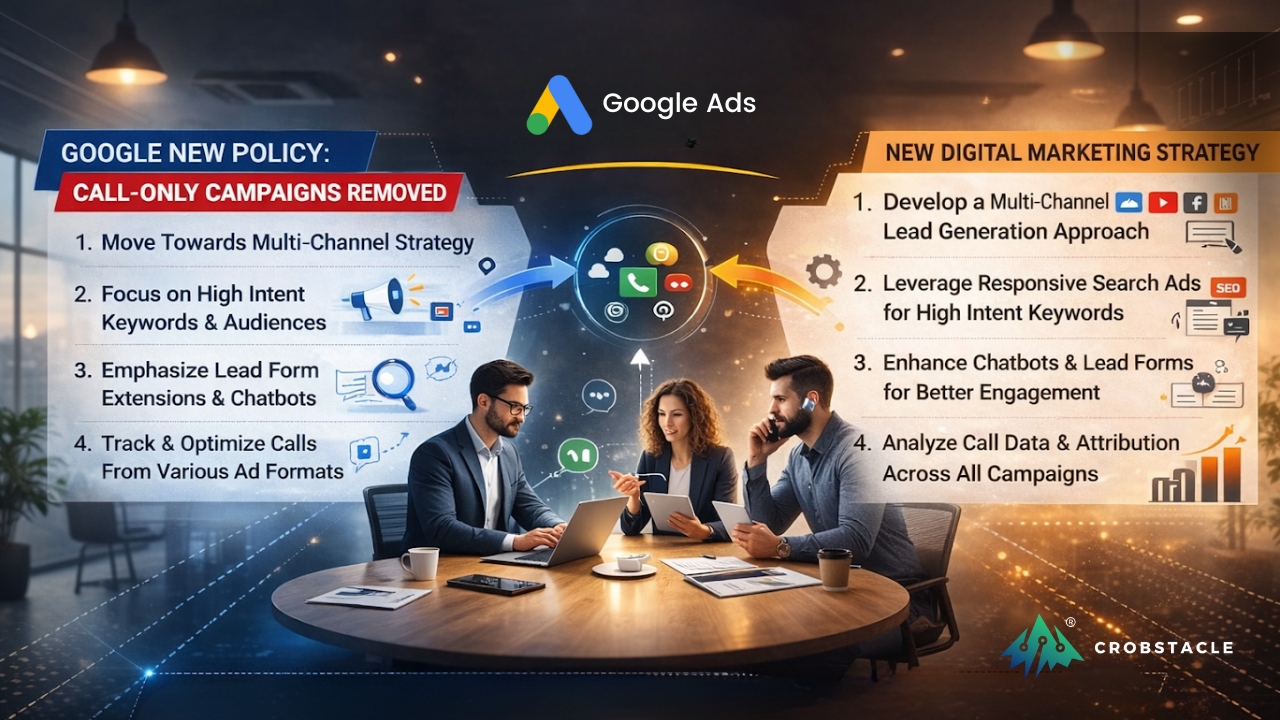
Google Ads continues to move toward a more automated and intent driven advertising ecosystem. One of the most important updates advertisers need to prepare for is the gradual phase out of Call Only campaigns. For businesses that rely heavily on phone calls for lead generation, especially in service based industries, this change requires a strategic shift rather than a last minute adjustment. This article explains what is changing in Google Ads, why Google is making this move, and how businesses can adapt their campaigns intelligently to continue generating high quality inbound calls.
What Is Changing in Google Ads
Google has officially announced that Call Only campaigns will be phased out in stages. From February 2026, advertisers will no longer be able to create new Call Only ads. By February 2027, all existing Call Only ads will stop serving entirely. While this means Call Only campaigns will continue to run for some time, they are no long era future ready format. Businesses that continue to rely on them without planning a transition risk sudden performance drops when the format is fully sunset.
What Is Replacing Call Only Campaigns
Google is consolidating call generation into standard Search campaigns using Responsive Search Ads combined with Call Assets. Instead of running a separate Call Only campaign, advertisers are now expected to create Search campaigns where Responsive Search Ads handle both click and call intent. A Call Asset is added to the campaign or ad group, allowing Google to show a call option when it determines that a user is more likely to convert through a phone call. This approach allows a single campaign to serve multiple user behaviors. Some users may call immediately, others may visit the website first and convert later, and Google can optimize across both paths using shared data.
Why Google Is Making This Change
Google’s long term advertising strategy is focused on simplifying ad formats and improving machine learning optimization. Call Only campaigns were limited to a single conversion action, which restricted Google’s ability to learn across different user journeys. By merging call intent into Responsive Search Ads, Google can show ads in more auctions, optimize bids using broader data signals, and improve overall campaign efficiency. This shift aligns with Google’s broader move toward automation and intent based delivery across all ad products.
What This Means for Call Driven Businesses
For businesses that rely on inbound phone calls, this update is not a loss of capability. Calls can still be generated at scale, but the way campaigns are structured must change. Simply adding a call asset to an existing campaign without revisiting keywords, bidding strategy, and conversion tracking can lead to unstable results. A thoughtful transition is essential to protect lead quality and maintain performance consistency.
How to Adapt Google Ads Campaigns Strategically
The transition away from Call Only campaigns should be planned and data driven. Start by auditing existing Call Only campaigns. Identify which campaigns are built purely for calls, which keywords generate the highest quality phone leads, and what the historical cost per call looks like. Device performance, business hour performance, and call duration data should also be reviewed. Next, rebuild campaigns using standard Search campaign structures. Use the same high intent keywords and create Responsive Search Ads with clear call focused messaging. Attach Call Assets at the campaign or ad group level so Google can serve call options when appropriate. During the transition phase, it is recommended to run the new setup alongside existing Call Only campaigns. This allows performance comparison and ensures stability before fully switching away from the legacy format. Accurate call conversion tracking is critical. Businesses should track calls generated from call assets as well as calls that occur after users visit the website. Minimum call duration thresholds should be applied to maintain lead quality and prevent low intent interactions from influencing bidding algorithms. Once sufficient conversion data is collected, smart bidding strategies such as Maximize Conversions or Target CPA can be introduced. These strategies work best when conversion signals are consistent and accurately measured. Mobile optimization also becomes increasingly important. Most call intent originates from mobile devices, so mobile bid adjustments, call asset scheduling during business hours, and alignment with call handling capacity are essential to avoid wasted spend and missed opportunities.
Best Practices for Call Focused Performance
High intent keywords that indicate readiness to speak should be prioritized. Ad copy should clearly communicate trust signals, expertise, and response speed. Landing pages should prominently display clickable phone numbers and support call tracking. Phone calls should be treated as part of a broader conversion journey rather than a standalone action. Tracking both direct and assisted calls provides better insight and improves long term optimization.
Final Thoughts
The removal of Call Only campaigns is part of Google Ads’ evolution toward unified, intent based advertising. Businesses that adapt early will benefit from stronger optimization, clearer reporting, and more sustainable performance over time. For brands that depend on inbound calls, this transition should be approached proactively. Waiting until the format is fully discontinued increases risk and limits strategic flexibility. At Crobstacle, our approach is grounded in hands on experience managing performance driven Google Ads accounts across industries. We focus on building future ready systems that align with how Google Ads is evolving, not how it worked in the past. If you would like to understand how this Google Ads update impacts your current campaigns, or if you want clarity on how we are restructuring accounts to maintain and scale call driven performance, you can reach out to us for a free 30 minute consultation call. We will walk you through what is changing in your account, what actions are required if any, and how to transition without risking lead flow.
Connect with us on LinkedIn
https://www.linkedin.com/company/crobstacle/